The Hidden Cost of Curb Appeal: How Pine Straw and Mulch Invite Pests to Your Foundation
Discover how popular Southern ground covers like pine straw and wood mulch can inadvertently create ideal bridgeheads for termites, roaches, and rodents along your foundation.
Landscaping and Foundation Vulnerability
A manicured landscape is one of the most satisfying elements of homeownership. In and around Birmingham, pine straw and shredded hardwood mulch are regional staples for good reason: they enhance curb appeal, suppress weed growth, regulate soil temperature, and help garden beds retain precious moisture during sweltering Alabama summers. However, the very attributes that make organic ground covers beneficial for azaleas and hydrangeas also make them exceptionally inviting to perimeter pests.
When organic bedding is installed directly against a home's foundation, it fundamentally alters the immediate microclimate of that perimeter. It creates a shaded, humid, food-rich environment that shields outdoor pests from sunlight and natural predators. Over time, that lush garden bed can transform into a bustling staging ground where subterranean termites, wood-destroying organisms, invasive insects, and rodents easily find paths into your crawl space, basement, or living areas.
The Dual Threat: Moisture Retention and Organic Decay
Pests require three fundamental elements to survive and reproduce: food, moisture, and harborage. The foundation of a home is normally exposed to direct air circulation and sunlight, both of which serve as natural deterrents to moisture-dependent organisms. Piling mulch or pine straw against the foundation wall changes this dynamic instantly.
First, dense layers of mulch dramatically slow evaporation. Rainfall and irrigation soak into the material, creating a saturated zone against the masonry or concrete. In the humid climate of Central Alabama, soil beneath deep mulch beds rarely dries out completely. Second, both wood chips and pine needles are decaying plant matter. As bacteria and fungi break down this organic material, it softens the ground, attracts detritivores, and forms an active, self-sustaining food web right next to your home.
Subterranean Termites and Wood Mulch
Perhaps the most severe threat associated with foundation mulch is the subterranean termite. Subterranean termites are ubiquitous in Alabama soils and are driven by an instinctual search for cellulose and moisture. Because their soft bodies rapidly desiccate when exposed to dry air or ambient heat, they must remain in damp environments or build mud tubes to travel across exposed surfaces.
A thick layer of wood mulch provides the exact conditions subterranean termites seek:
- Continuous Moisture: Damp soil under mulch gives termite foragers an uninterrupted highway toward the foundation wall without risking dehydration.
- Subsurface Concealment: Termites can easily construct shelter tubes unseen beneath the cover of mulch, bypassing the visual inspection zone that homeowners and pest professionals rely on to detect activity.
- Direct Food Contact: If mulch is piled high enough to touch siding, wood trim, porch decking, or weep holes in brick veneer, termites can transition straight into structural framing without ever having to cross exposed concrete.
While wood mulch itself is not always the primary food source that spawns a massive colony, it provides the bridge and optimal soil condition that draws native subterranean termites right to your home's most vulnerable structural entry points.
Pine Straw: The Classic Southern Harborage
Pine straw is widely favored throughout Birmingham neighborhoods for its neat appearance, ease of installation, and natural, woodland aesthetic. Yet pine straw carries its own unique set of pest vulnerabilities, largely stemming from its physical structure.
Unlike chipped bark, which compacts into a relatively solid barrier, pine straw creates an airy, layered matrix. This loose thatch produces an extensive network of tiny chambers and tunnels protected from both wind and direct rain. It is arguably the premier outdoor harborage for large peridomestic cockroaches, commonly referred to across the South as wood roaches or palmetto bugs. These insects feed on decaying debris, mold, and decaying organic litter within the needles, thriving in the damp darkness.
Additionally, pine straw beds placed against the foundation frequently house:
- Centipedes and Millipedes: Attracted to damp organic matter, these multi-legged arthropods breed in pine straw and regularly migrate through basement vents, crawl space louvers, and under exterior door sweeps during weather extremes.
- Earwigs and Pillbugs: Moisture-loving scavengers that multiply rapidly in the shaded, damp base layer of decomposing needles.
- Spiders: Hunting spiders, including wolf spiders and brown recluses, establish webs and daytime retreats within loose pine straw to prey on the abundant insect life dwelling inside it.
Rodent Activity Around Perimeter Beds
When discussing foundation landscaping, homeowners often overlook the role ground cover plays in rodent infestations. Both mice and rats are prey animals that rely heavily on cover to navigate their environment safely. They possess poor vision and navigate primarily by touch and scent, preferring to move along vertical edges under the protection of dense vegetation or heavy bedding.
A deep bed of pine straw or wood mulch running directly along a brick foundation wall creates an ideal rodent runway. Mice can burrow shallow trenches beneath the material, shielded from hawks, owls, and domestic pets. Furthermore, pine straw provides rodents with soft, pliant material that they routinely harvest to line their nests inside wall cavities, attics, and crawl spaces.
Once rodents establish regular movement patterns through foundation ground cover, they systematically inspect every seam of the structure. Weep holes, gaps around plumbing and HVAC conduit lines, deteriorated crawl space access doors, and warped siding all become accessible entryways just inches away from their sheltered pathways.
Best Practices for Pest-Conscious Landscaping
Mitigating pest risks does not mean you must pave over your flower beds or abandon decorative ground cover entirely. With deliberate placement and thoughtful maintenance, you can enjoy a beautifully landscaped yard while preserving your foundation's defensive perimeter.
1. Maintain a Clear Inspection Buffer
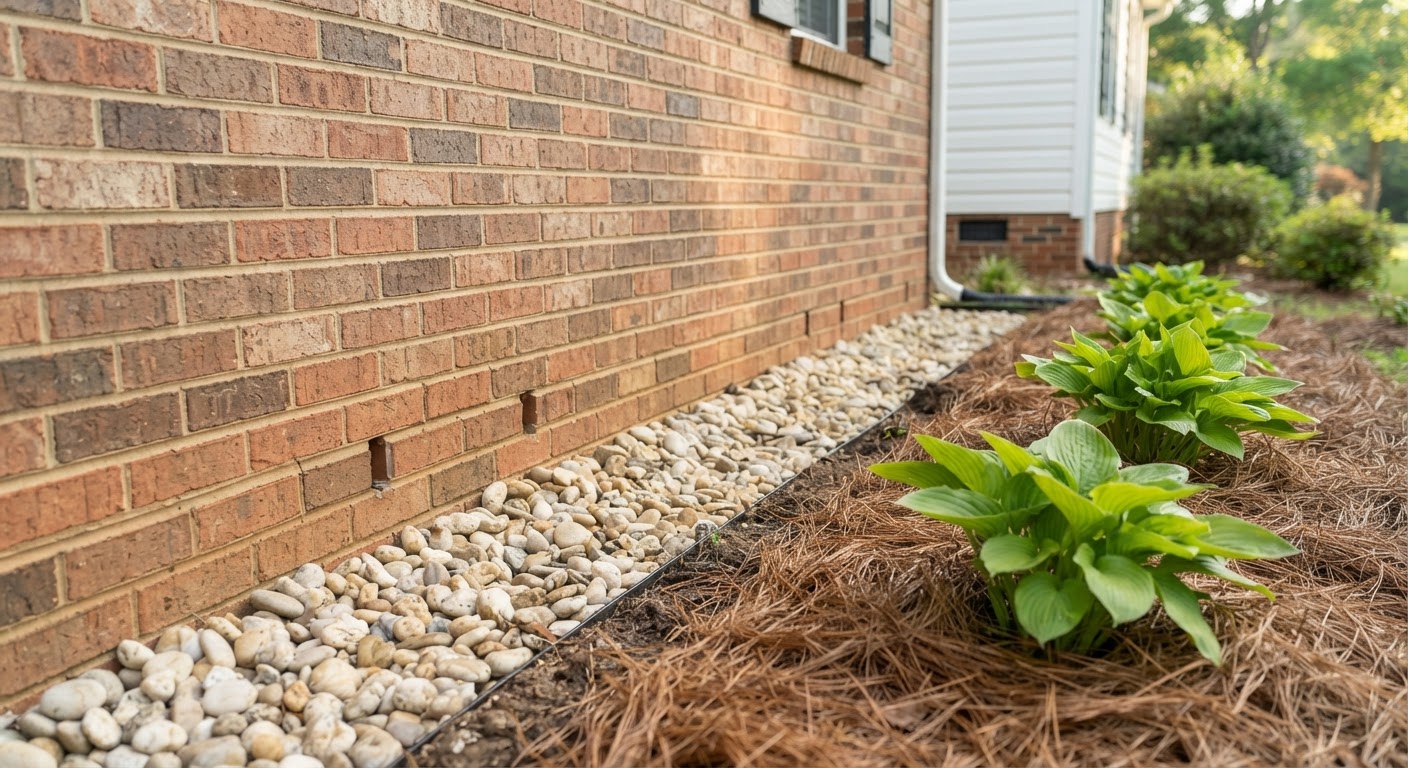
Create a 6- to 12-inch clear zone between your foundation wall and any mulch or pine straw beds. This dry perimeter strip—often left as bare dirt, pea gravel, or decorative river stone—serves several critical functions. It exposes potential termite mud tubes to open air and view, deprives crawling insects of moisture right at the wall, and discourages rodents from following the masonry edge.
2. Limit Depth and Replace Rather Than Layer
Avoid applying more than two to three inches of mulch or pine straw. Excessive depth retains harmful levels of moisture and accelerates lower-layer rot. Rather than simply piling fresh layers on top of old material year after year, rake away old, decaying ground cover before installing a fresh, thin layer.
3. Keep Siding and Weep Holes Fully Exposed
Never allow landscaping materials to bridge the gap between soil and finished exterior cladding. You should always be able to see at least four to six inches of bare foundation wall below your siding, stucco, or brick weep holes. Obscuring this transition point gives termites and ants direct, undetected subterranean access into wall voids.
4. Redirect Water Sources
Foundation beds often stay excessively wet because of roof runoff and misdirected irrigation. Ensure downspout extensions discharge rainwater at least five feet away from the home, and calibrate sprinkler heads so they water garden plants without spraying the foundation or soaking perimeter mulch.
5. Trim Low-Hanging Foliage
Dense shrubs, ground-covering ivy, and low branches that touch both the ground cover and the house act as physical ramps for pests. Prune back foundation shrubs so there is sufficient clearance between the plant foliage and the structure, allowing sunlight and air to dry the base of the wall.
Balancing Beautiful Grounds with Structural Defense
Every element of your home's exterior impacts its resistance to common pests. While pine straw and mulch serve valuable horticultural purposes, their proximity to your foundation demands ongoing vigilance and strategic management. By creating intentional buffer zones and limiting organic moisture reservoirs, you significantly reduce the likelihood of costly structural intrusions.
If you are concerned about pest activity along your foundation or want to evaluate your home's perimeter defenses, contact Alder Crest Pest Control in Birmingham for a comprehensive inspection and targeted management plan.
Need help from Alder Crest Pest Control?
Contact our team to discuss your service needs in Birmingham and surrounding service areas.